Container Management
Everything you need to know about managing Docker containers in Zenithal.
Container Dashboard
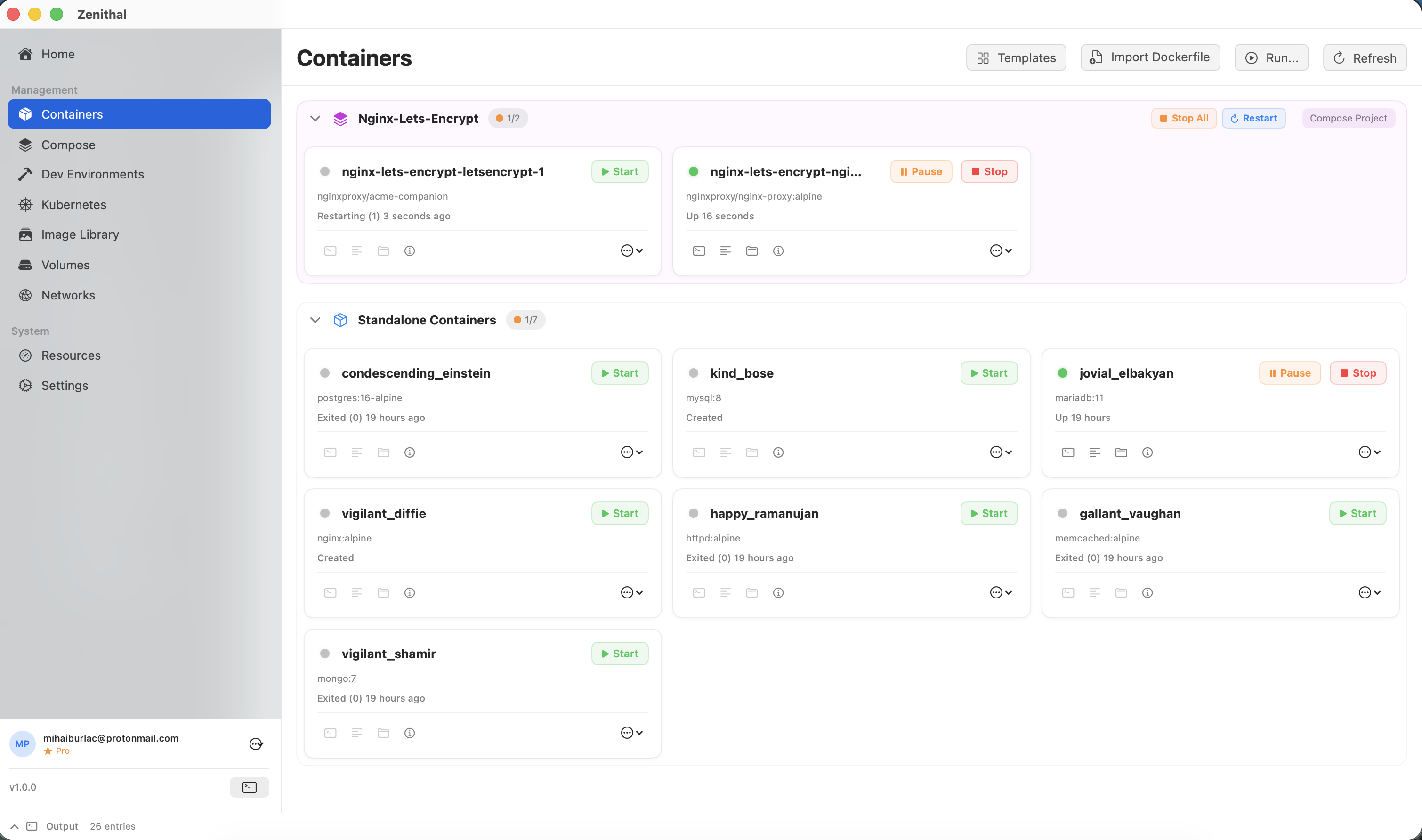
The Containers view shows all your Docker containers with real-time status updates. Containers are automatically grouped by their Compose project or shown as standalone.
Status Indicators
- Green - Container is running
- Gray - Container is stopped
- Orange - Container is paused
Container Actions
Click on a container to select it, then use the toolbar or right-click menu:
Basic Actions
- Start/Stop - Toggle container state
- Pause/Resume - Pause or resume a running container
- Restart - Restart the container
- Delete - Remove the container (with confirmation)
Inspection & Monitoring
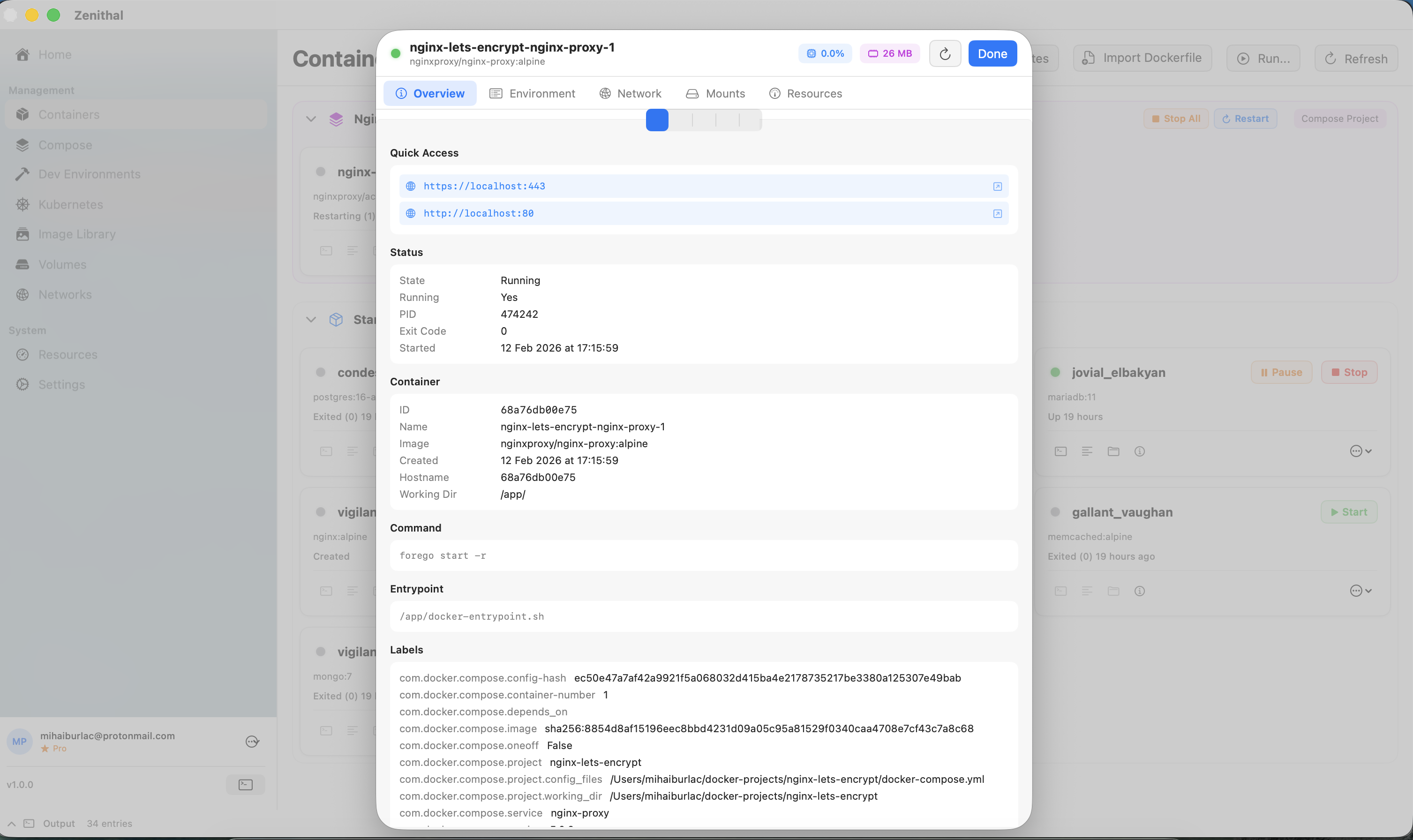
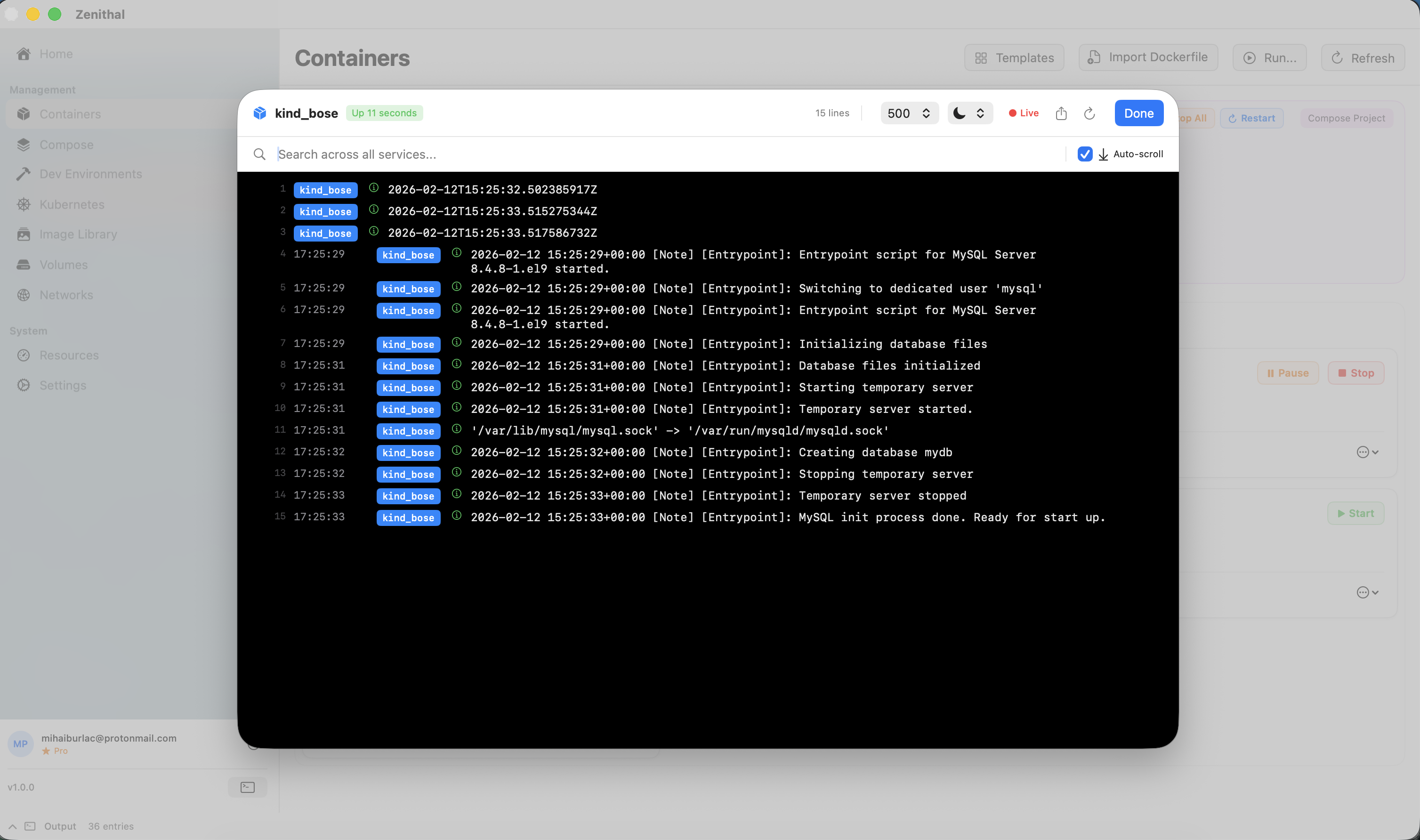
- Logs - View real-time container logs
- Terminal - Open an interactive shell inside the container
- Inspect - View detailed container configuration (JSON)
- File Browser - Browse the container's filesystem
- Health Info - View health check status and history (for containers with health checks)
Advanced Actions (Pro)
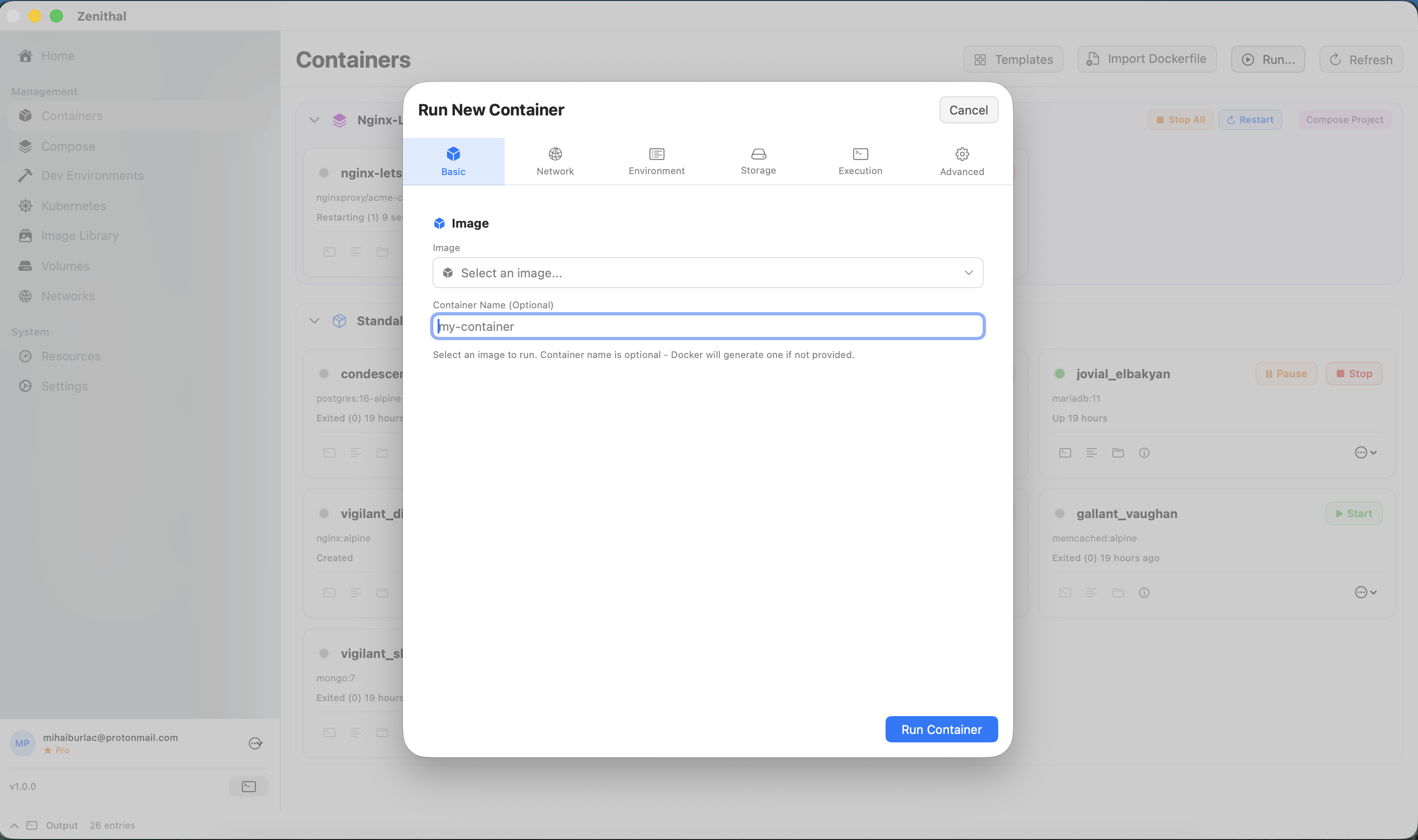
- Clone - Duplicate a container with its configuration
- Export - Save container as a tar archive
- Rebuild - Rebuild from the original Dockerfile
- Save as Template - Create a reusable template from a running container
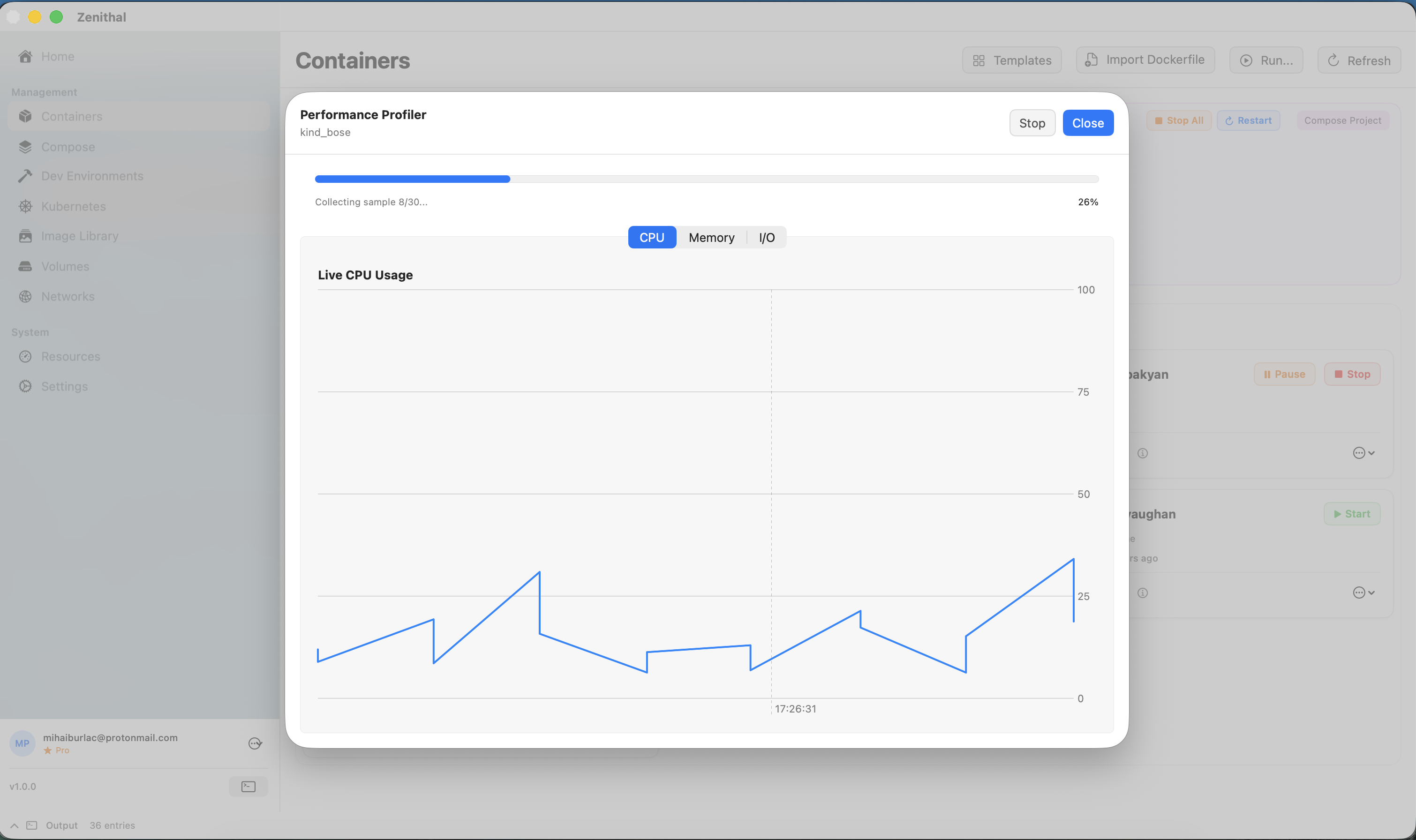
- Performance Profiler - Deep-dive CPU, memory, and I/O analysis
- Generate Dockerfile - Reverse-engineer a Dockerfile from any running container
- Dockerfile Import Wizard - Import and parse existing Dockerfiles with a visual interface
Creating Containers
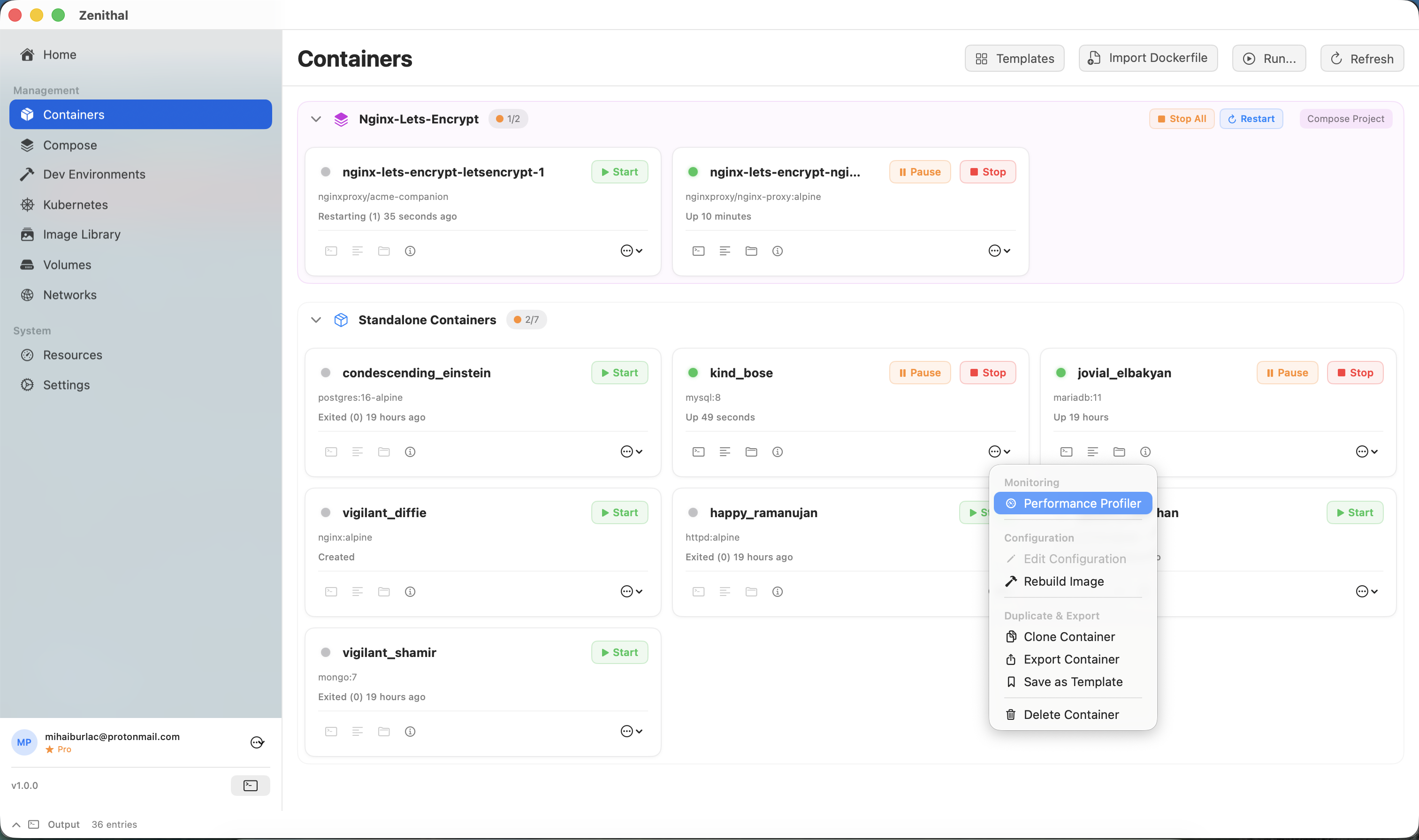
Click the + button or press Cmd+N to create a new container.
Smart Features
- Command Sanitization - Intelligent input sanitization prevents accidental command injection
- Auto-Populated Env Vars - Database images automatically get pre-filled environment variables (root passwords, default databases)
- Bind Mount Indicators - Visual indicators clearly distinguish bind mounts from volumes
Configuration Options
- Image - Search Docker Hub or enter a custom image name
- Name - Optional custom container name
- Port Mappings - Expose container ports to your Mac
- Environment Variables - Set runtime environment
- Volumes - Mount host directories into the container
- Network - Choose which Docker network to attach
- Resource Limits - Set CPU and memory constraints
- Restart Policy - Configure auto-restart behavior
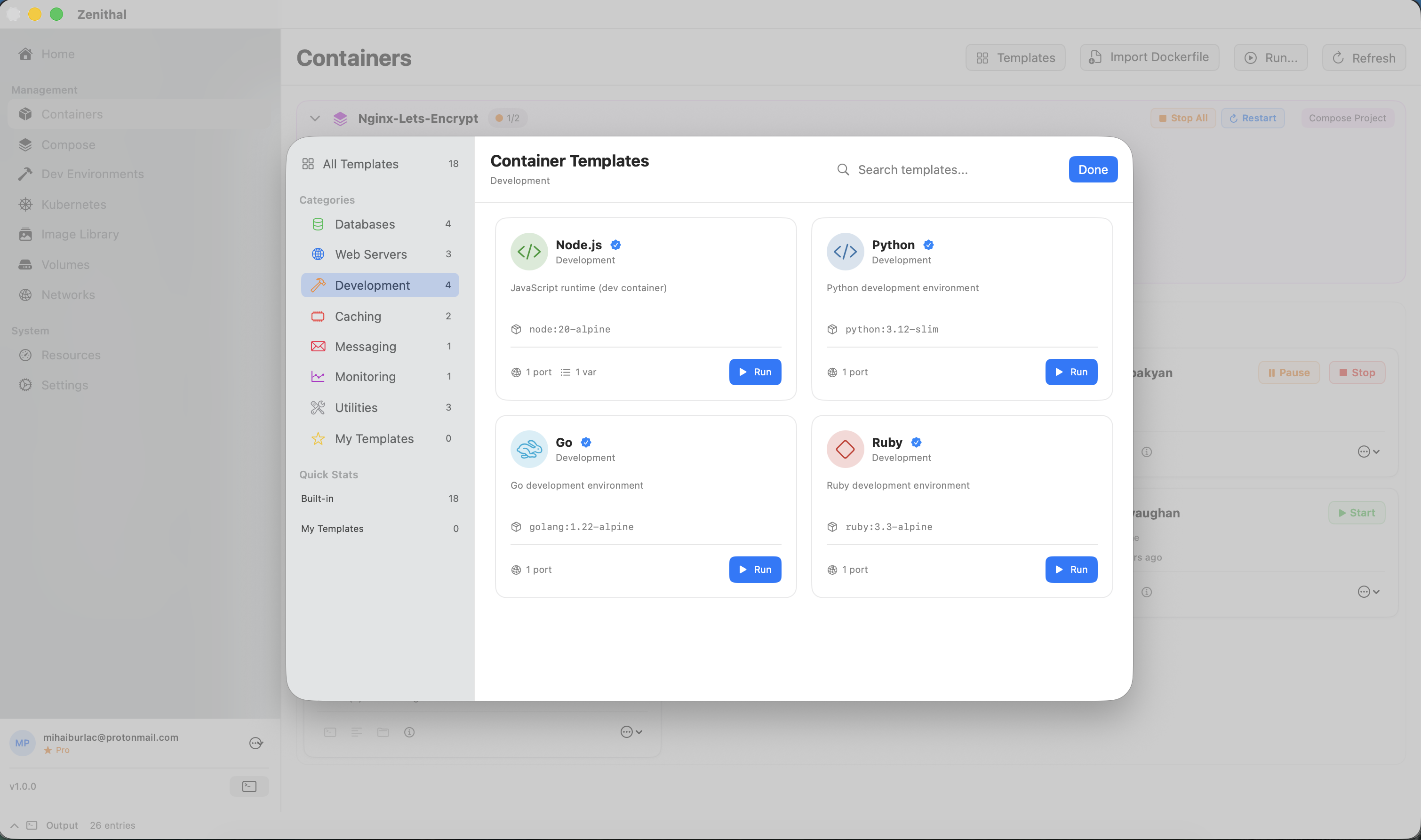
Container Templates
Templates provide one-click container setup for popular services:
Free Tier (10 templates)
Nginx, Redis, PostgreSQL, MySQL, MongoDB, Alpine, Node.js, Python, Ubuntu, BusyBox
Pro Tier (65+ templates)
Additional databases, monitoring stacks, development tools, and more.
Terminal Access
Open an interactive terminal inside any running container:
- Select the container
- Click Terminal in the toolbar or press
Cmd+T - Choose your shell (bash, sh, or custom)
Tip: The terminal supports copy/paste, scrollback, and can be detached into a separate window.
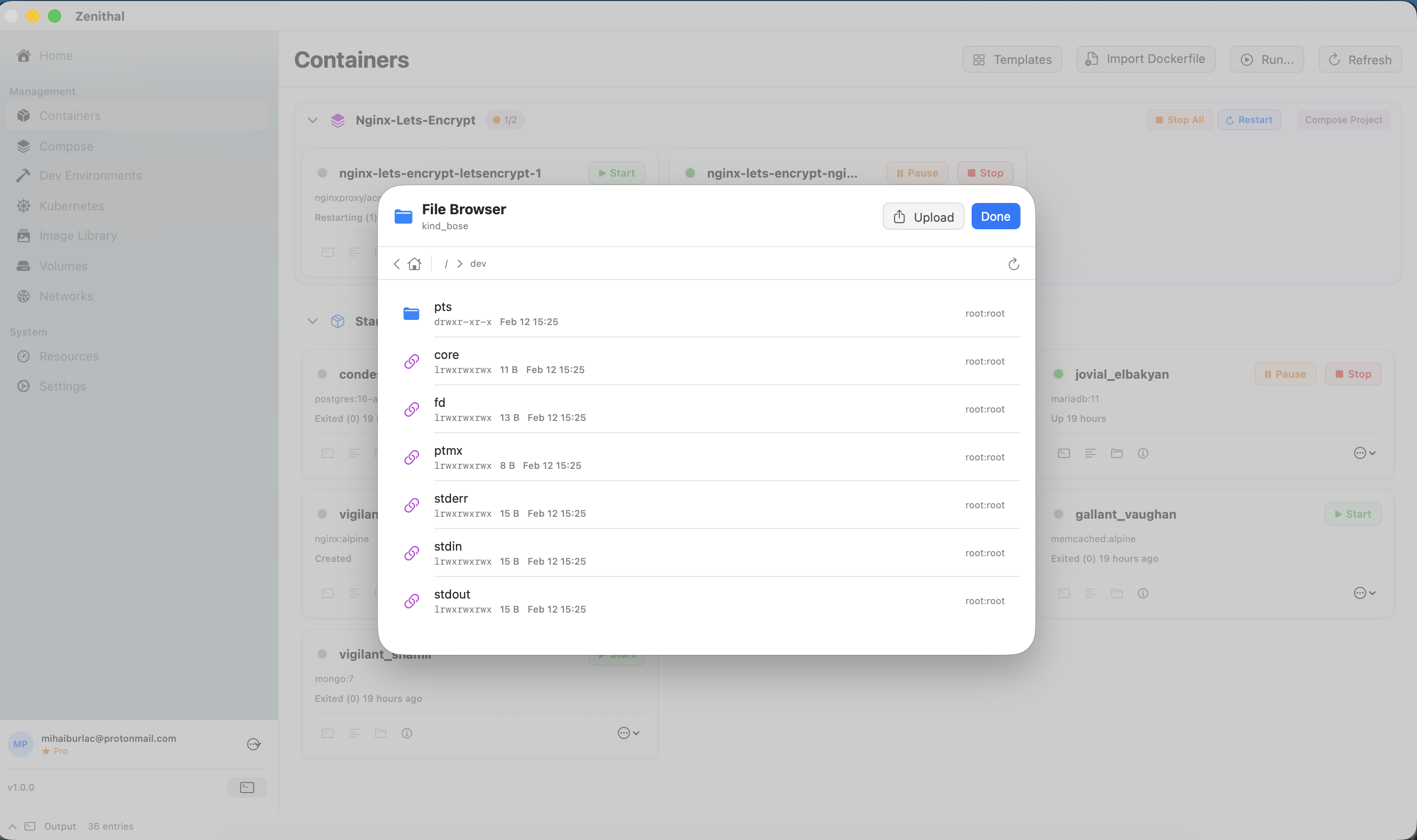
File Browser
Explore and manage files inside running containers:
- Navigate the filesystem visually
- View and edit text files
- Download files to your Mac
- Upload files from your Mac
- View file permissions and metadata
Resource Monitoring
Monitor container resource usage in real-time from the container detail view:
- CPU - Usage percentage and core allocation
- Memory - Current usage, limit, and swap
- Network I/O - Bytes sent and received
- Block I/O - Disk read/write operations
For system-wide monitoring, visit the Monitor section in the sidebar.
Bulk Operations
Select multiple containers using Cmd-click or Shift-click, then perform bulk actions:
- Start/Stop/Restart all selected
- Remove all selected
- Export configurations